
Did you know that last year 31% of ALL GIVING in the States occurred in the month of December? Or to put it this way, did you know that 12% of giving occurred in the last three days of the year?
That’s right. 12% all in 3 days.
Did you know that twenty-five to thirty percent of ALL DONATIONS come in at the end of the year (November and December). Thus begs the question: Do you have a end of the year strategy for financial partnership development? If the answer is no, or you were even tempted to coast in November and December and simply eat Christmas cookies, Christmas shop, and watch Elf and/or the new Star Wars movie 6 times in one week… I plead with you to keep those percentages in mind and reach higher. Why? Because people are going to give – and they want to give to someone they know. Thus you may want to figure out how that giving can be to you and your ministry cause.
Here are a couple of ideas for your year end strategy:
1. SEND OUT A REGULAR NEWSLETTER at the beginning of November, even if you have done one recently.
- Keep it to 1 page – be brief.
- Keep it ministry focused with specific stories.
- Say thank you.
- Don’t do any asks on this newsletter.
2. CREATE A CHRISTMAS / END OF YEAR LETTER Sometime before December 31st (think about sticking it in the mail the day after Thanksgiving) send out a end of year letter to your existing financial and prayer partner list.
Include the following components:
- Merry Christmas greeting.
- Express your authentic thankfulness for your support team. Emphasize and focus your letter on the impact your partners are having.
- Percentage update of where you are at raising your funds.
- A gift-wrappy-Christmasy-wonderful-snowy graphic that has your organization’s giving website / ways to give. (Make it pretty – I made the one below in 5 minutes using Canva.com)
- An actual ask in the letter for finances (yep, this is the only time of year I say go for it on a letter!). Consider making it about one story of a life changed or need.
- Do a nice handwritten PS.
Tips for end of year letter:
- Switch this up from a regular newsletter. Use a slightly different template than a regular newsletter and maybe make it more like a letter.
- Don’t send an ask end of year letter to anyone who recently (probavly within the past 2 months) started giving (or gave 1 time) or recently increased their giving. Maybe just send them Christmas cards instead. You don’t want to overwhelm them with too many asks.
- Consider creating a different version of your end of year letter maybe those who haven’t started giving yet or didn’t give when asked. Change particulars as needed for the audience.
- Perhaps for people who have said that they can’t give – give them a soft opportunity to give but change the thankfulness for being on your support team and instead thank them for their prayers and involvement in your life.
- For those you haven’t yet met with, change the particulars to reflect your desire to meet with them soon and thank them for the involvement in your life. You may want to include a soft ask but not as bold as to those you send it to who you’ve already met with.
- Snail mail your end of year letter.
- Keep it to 1 page make it look really nice!

3. HAVE AS MANY FACE-TO-FACE APPOINTMENTS AS POSSIBLE NOW. Are you are tempted to put the breaks on contacting individuals for face-to-face appointments? Particularly in November and December? Let me tell you, experience has taught me that it can be a GREAT time for face-to-face appointments. Don’t stop reaching out to connect with people over coffee and making the ask. Some tips:
- Pay for their coffee.
- Get a small gift for your potential financial partner and bring it to your appointment.
- Try and set up the appointment sooner than later. If they cant meet before the end of the year, put something in the calendar for January. Allow a couple of extra weeks to put something on the calendar.
- Make it about them when you meet as much as it is about you. Ask questions and get excited about who they are.
- Send a thank you card within 48 hours after you meet – regardless of responses!
- If you cannot reach someone toward the holidays, don’t sweat it. Try reaching out to them again in January.

4. SEND YOUR FINANCIAL PARTNERS / PRAYER PARTNERS CHRISTMAS CARDS / SMALL GIFTS. December is a great time of year to express your thankfulness to your support team. Go above and beyond that newsletter! Either send a Christmas card after your newsletter or perhaps with it. Christmas cards should be handwritten and possibly include a small gift of thanks. It can go a long way in letting your financial partners know you care about them.
5. CREATE A FACEBOOK CAMPAIGN IN NOVEMBER OR DECEMBER. A well crafted, intentional, relational Facebook campaign can be helpful during these months of giving. Keep in mind, this is only if you have gotten far enough in your financial partnership (75-80%) to start one.
6. SEND OUT AN EMAIL ON DECEMBER 29th or 30th. Include the following.
- Greeting of happy new year for your partners
- Remind them of your ministry as they execute their giving.
- Use that christmasy-graphic and update it to be new-years-y with a clickable link on giving online.
- Don’t include a formal ask. Just thank yous and the graphic on how to give online.
7. DUST OFF YOUR CONTACT LIST AND TAKE ANOTHER LOOK AT IT. Now is a good time to go back to the beginning of your season of itineration. Dust off that old initial contact list and go through it with a fine comb. As you comb through it create a new list of those you were not able to get ahold of, those who have committed to give but haven’t started yet, and those you never asked because you got too scared (whhaaatt you say?! How did she know that?!), and those that you just simply have yet to ask. Take that list and get back to contacting them about joining your team. BONUS POINTS: As you go through your list text / email / Facebook message those that are highlighted to you and just say hi.
I hope you find these ideas helpful in building your strategy! – JF


 B. After clicking on Lists, click “Create List”.
 C. Fill in the List’s name, what email address you’ll be sending this from, your name, and other information needed.
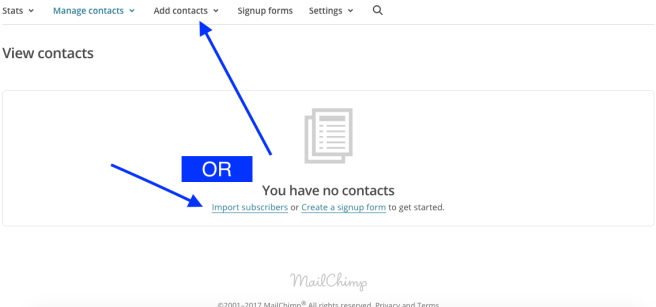 ** If you do choose to import your contact list typically you’d either do so by .csv files (this is good if you keep your contacts organized on your computer using a program such as “Contacts” for Macs or “Address Book” for PCs) or by copy and pasting from a file (for instance from Excel). Either way you may have some cleaning up of your files to do, so be patient!
 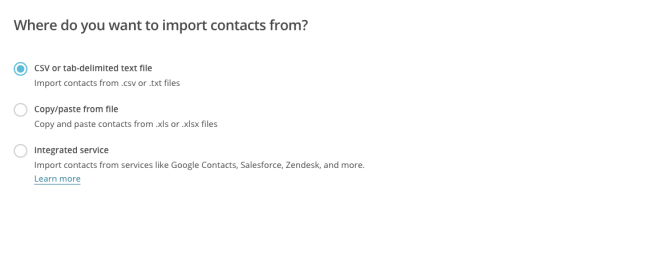 E. When you are done importing or manually adding the subscribers to your List, you are ready to move onto Creating Your Campaign!
 C. Choose “Regular” for your email type. Choose a campaign name, then click “Next” at the bottom right of your screen.
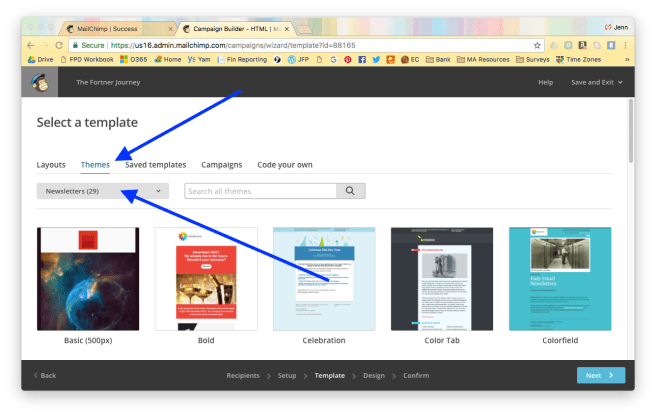
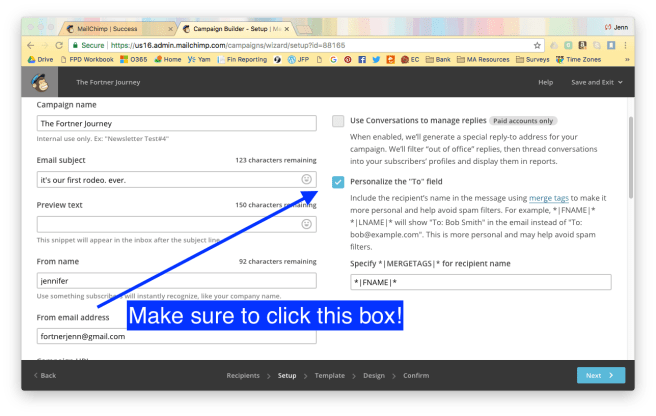 F. Now it’s time to select a Template. There are a lot of pre-made templates out there that are great! If you’d like to go the easy route click “Themes” and explore until you find one that works for you. If you want to choose a Layout and build the template yourself go for it! Simply click “Layout” and choose the one that works best for you. You’ll spend some time custom making your Template by choosing design and content elements. (Mailchimp also has a couple of helpful links in the Layout feature that will help you get started).
  G. Now that you’ve chosen and designed your Template, it’s time to actually put together your newsletter. When you create your newsletter, you can choose to add some of the elements on the left side as you wish (such as additional text, images, graphs, etc.). To do so simply drag and drop where you want the element to the right side of your screen onto your existing Template.
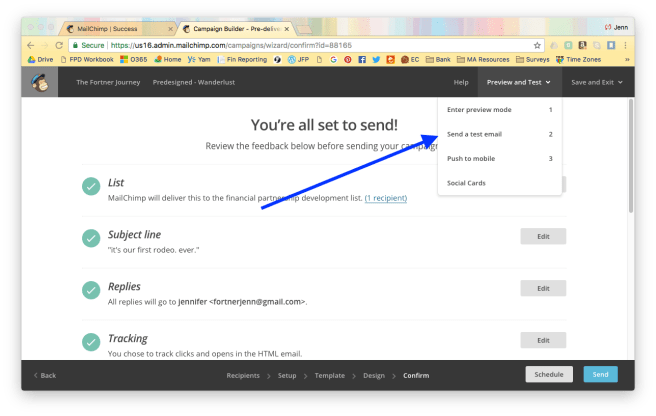
 H. When you are done creating your newsletter and carefully writing your text, I recommend previewing your Campaign and sending a test email to yourself first – so you can make 100% sure your e-newsletter is awesome!
 Step 5: Send Your Campaign and Your DONE!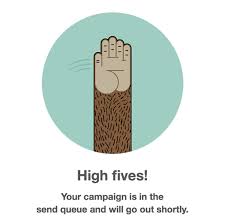


 TEXTING
 HOW MANY TIMES SHOULD I CALL BEFORE I QUIT?


 The idea behind Big Head and Long Tail is in most markets there is a “Big Head” and a “Long Tail”. The Big Head is one or a few companies that dominate a sector of the market. The Long Tail is everyone else.
 we could add Pepsi, which controls another 30% of the soda market. Together their soft drinks dominate the soda market, thus making Coca-Cola and Pepsi the Big Head(s). Yet, in the soda market there are hundreds of other companies producing a large variety of soft drinks in the world today.
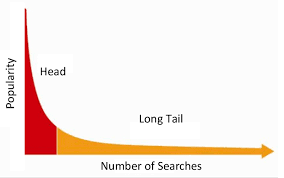 In this graph Coke & Pepsi would be represented the red area, as they dominate the market.
 WHAT IS THE LONG TAIL?





 Financial Partnership Development