10 Easy Steps On Becoming A Better Public Speaker

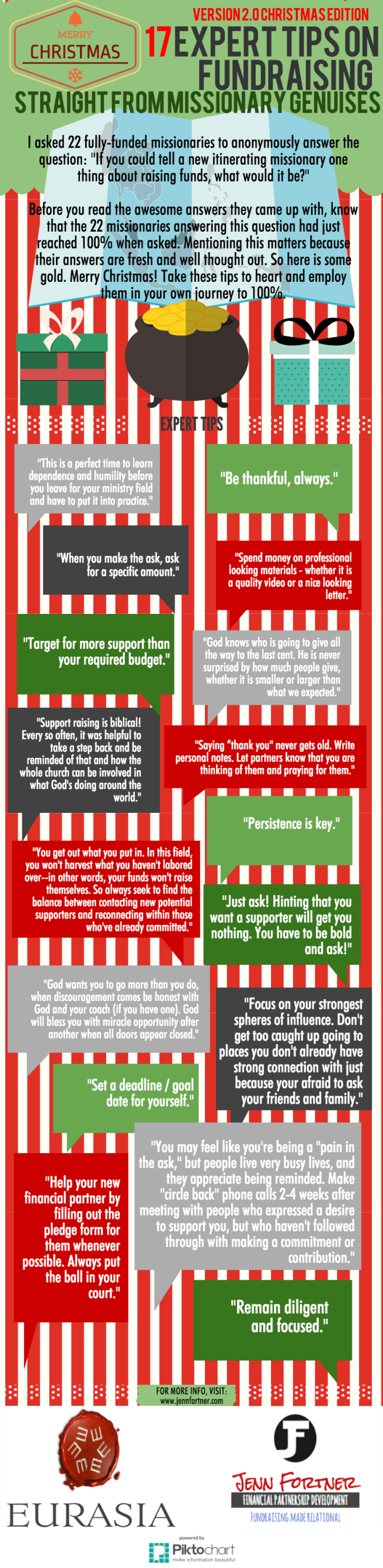
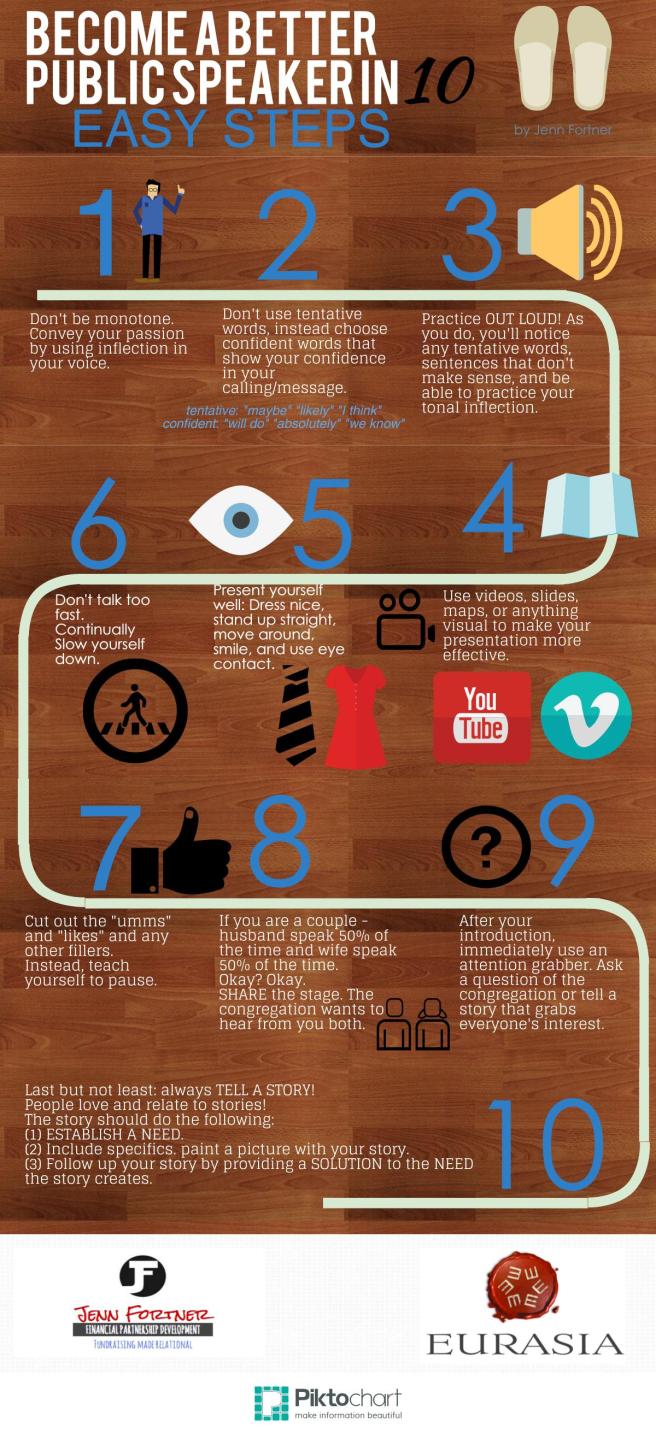
Untitled Infographic (5)

I used to be terrified to speak in public. Knotty stomach, raised pulse, sweating, and no sleeping the night before. Growing up I avoided any classes that had me speaking in front of the class. I cannot count how many times I ran in the opposite direction if there was even a hint of me having to be in front of a group.

Now, surprisingly, I’m mostly over it. Why the dramatic change? Practice. A lot of practice. I have been blessed with leadership over the years that encouraged me as well as provided no-way-out situations speaking to groups. (I hated them for it then, love them for it now) As for my personal skill level, I cannot say I have arrived exactly where I want to be; but I have come a long way and am proud of where I am today.

A lot of missionaries and those in ministry are plagued by fear of public speaking. Many missionaries are not afraid of public speaking, but have a long way to go to refine the art of giving a impactful message or 5 Minute Window at a church service. Whether you are starting off with cold sweats just thinking about public speaking, a boarder-line professional, or somewhere in between – I hope this simple info-graphic helps. Here are a couple of additional notes for some of the steps above:

STEP 4 VISUALS: If you are having a hard time describing where you are you are going overseas, a job you are doing, etc. use something visual to illustrate it! Also, if you are a missionary or traveling minister speaking at a church, set up a table in the back but don’t let it be boring. Create ways for people to comfortably interact with you after the service.

Some examples: (1) Create a alphabet in the language of the country you are going to so those stopping by your table can spell their names (and children’s names) in your country’s alphabet. (2) Have a video about your ministry continuously playing on a laptop or tablet. (3) Have something small available that represents your ministry.

STEP 9 THE ATTENTION GRABBER: After providing a brief introduction of yourself (and your family if you have one), you need an attention grabber. Use one of the following to grab people’s attention from the very beginning:

  • Share a short personal story. “I’d like to begin by telling you a story about Anna, a 5 year old girl I befriended in Spain.” 
  • Ask a group question or do a quick group survey. “Raise your hand if you have any idea where Qatar is on a map?” (then show the map later on the slide). “What do you think of when you hear the word “poor”? You shouldn’t be receiving actual answers, only developing a story / idea and involving the congregation.
  • A thought-provoking statement. Impressive to everyone (not just you). “Did you know that in Africa 1 out of every 10 people are _______” This of course needs to relate to what you are doing and why you are speaking with the group.

STEP 10 ESTABLISH A NEED: After you have their undivided attention, you must establish need. You can do this in multiple ways. Here are two suggestions that you can effectively establish need:

1. Share statistics and data. Appeal to the congregations logic and reasoning. Don’t overdo the stats — it’s easy to do.

2. Share stories, pictures, or videos. Appeal to the listener’s emotions with these. (If you shared a story for your attention grabber; a good idea is to come back to some aspect of the story, develop it more, and thread it throughout your presentation.)

One last word on public speaking: you will get better at it! Practice makes perfect, and the more you speak in front of groups the better you will become.

Are there any tips you have? Add them in the comments!

Want more information on public speaking, including an effective outline?  Read the Financial Partnership Development Workbook.

Connect Cards are Awesome.

Have you ever spoken at your home church, small group, or fundraising event and gotten stuck at your back table talking to a particularly chatty individual? All the other people scurry to lunch before your conversation ends and you feel the wave of missed opportunities that just passed?  Whomp.

Insert a wonderful tool to help combat: connect cards!

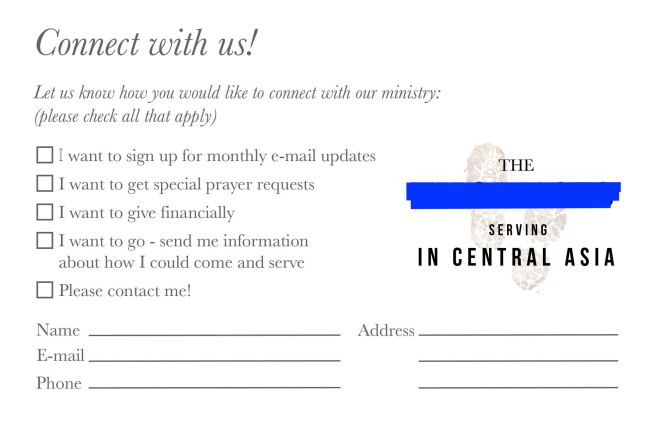
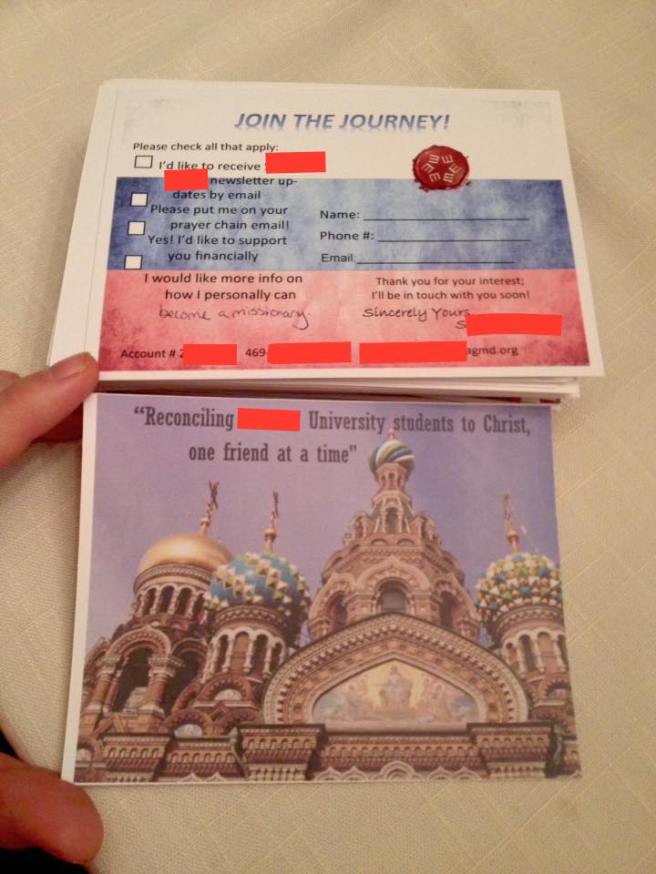
What’s a connect card you ask? It’s a stack of cards you put on your display table, chairs of an event, and/or attach to Sunday morning’s bulletin. Connect cards give you the ability to follow up with interested people after a service or event is over, and is an effective tool all about facilitating more face-to-face appointments and building relationships with the body of Christ. Below there are some examples of connect cards from various workers I coach. (thanks guys!)

Now, don’t go off quite yet and make your own. I want to explain something important first – here we go – pay attention: keep in mind that connect cards are only appropriate in certain circumstances.

“Connect cards are only meant for events, services, and small groups where you have gotten permission to connect personally with individuals about giving.”

Connect cards should only be used when they fall in accordance with a pastor / leader’s protocol in giving. So don’t assume that these cards can be placed on chairs of a congregation without communication or sneakily stuck into bulletins on a Sunday morning. Connect cards are only meant for events, services, and small groups where you have gotten permission to connect personally with individuals about giving.

Why is this so important? Well, a lot of churches do their missions / ministry giving by collecting offerings and disbursing where the church leadership collectively decides. That means if you were to come into that congregation and ask all the people inside to give to you personally, it may mess up what the pastor, board, and leadership of the congregation has decided to give to. You DO NOT want to be that person. #boo

Thus, connect cards are preferably only when you ask the pastor / leader “how does your congregation do missions / ministry giving?” If they say you may connect with individuals inside of the congregation on your own, ONLY THEN do connect cards come into play.

Connect cards are ideal when speaking to your home church (after you’ve figured out the protocol with your pastor on giving), small groups, fundraising events, and the like. If you do use connect cards, make sure to explain them from the platform in which you are speaking from – letting everyone know how to fill them out and what they are for.

I hope these help you as you seek to build out new relationships as you interact with the body of Christ! See the examples below and have fun building yours!

Connection Form PDF copypostcard-3.5inx5.5in-h-front

14316802_10157439182320503_316598276514332702_n.jpg2016092295161241-copy


Emma’s Top 5 Tips to Get to 100%

From time to time I ask workers I coach to provide a top 5 list of what worked in their overall partnership development strategy. *Emma was a worker who reached 100% fully-funded within a few short months, and I thought she would be a perfect person for you to glean from. Without further ado, here are Emma’s top 5 support raising tips.

(*Emma’s name has been changed to protect her identity) 

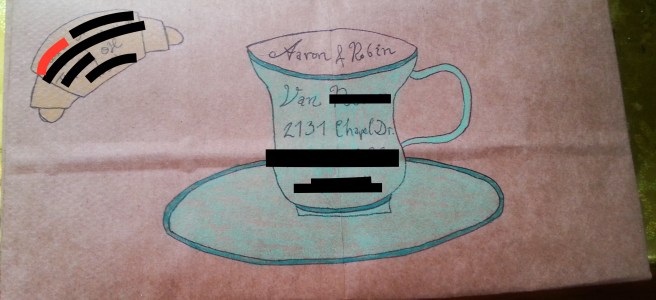
1. Make a Crafty, Well-Executed, Invitation Letter. I got a lot of compliments from people on my invitation letters. The design evolved a lot throughout the process, but the basic philosophy was to make a letter that was cute, hard to ignore/forget about, fun to read, and fun to make (kept me from getting bored!). Same deal for the thank-you notes. I’ve attached some pictures below. 

2. Have Patience and Time. I invested ridiculous amounts of time in my face-to-face appointments. My ministry partnership development training gave me a lot of badly needed structure and organization (which I could not have done this without). I found that extravagant time invested in face time with potential partners yielded rich returns not only on pledges, but also on life stories, advice, prayer, encouragement, and relationship.

My longest face-to-face was 4 hours. It actually revitalized me when I was in a support raising slump. My longest phone call was 2 hours, but gave me the opportunity to speak life into someone struggling with depression and also witness to them about Christ! (I prayed for this person over the phone and they broke down in tears saying that they had felt an amazing presence of God!) The time I invested was totally worth it for me. 

“I found that extravagant time invested in face time with potential partners yielded rich returns not only on pledges, but also on life stories, advice, prayer, encouragement, and relationship.”

3. Ask the Unexpected People. As I type this email, I have just received a $100 monthly pledge from someone who I have not talked to in over a decade. Almost without exception my most generous, enthusiastic, and faithful partners are people I either met briefly one time, or haven’t kept in close touch with over the years. I heard in my training that it ISN’T those you expect to help who do, and found this to be very true! This has also given me a lot more confidence in asking.  

“Almost without exception my most generous, enthusiastic, and faithful partners are people I either met briefly one time, or haven’t kept in close touch with over the years.”

4. Take a Sabbath. I am a dismal Sabbath-taker and need so much growth in this area. After my sending organization’s training I decided to get serious and I got an accountability partner who was also raising her own funds. With her accountability I picked out a middle-of-the-week day (people tend to want to meet on weekends, and church can be work when you’re in ministry) to lounge around in PJs, bake, read the Bible and devotionals for hours, and watch kung fu movies on Netflix. I found that this not only rested me, but also gave me perspective and helped me evaluate where I was spiritually and emotionally each week. It was great motivation to work harder the rest of the week so I could take that full day off. 

5. Use a Short Video. I got a quick 3-minute blurb from a video created by my senior workers in France. It is a video with people and places from the actual city and church plant, and I used my smartphone to pull it off of YouTube and show to potential partners during appointments.

The video not only established a great emotional and visual connection to the ministry, but it gave me a short break where their attention was off of me so I could breathe, pray, and assess how the appointment was going. It also saved me a lot of talking because it explained the vision of the ministry with uplifting background music. As far as security concerns go, I carried around a pair of small headphones so that if the meeting was in a public place, people could watch it without every person in a twenty-foot radius hearing about the mission. 

– Emma

As her coach, I saw Emma succeed by sticking with the process and remaining consistent week after week. I also saw her creatively think outside of the box, but while doing so use the principles and techniques she knew from training to be tried and true.

Have you been successful in getting to 100%? Give us some of your tips in the comment section! – JF

PSX_20160528_132708 copyPSX_20160528_132929 copyPSX_20160528_133057

The Only Resource List You’ll Ever Need

Okay it’s not the only Resource List you’ll ever need, but it’s pretty great. Below are some websites and tools ministry workers are finding to be of great help to them. Do you have an online tool, app, or book you are finding to be a major help to you in support raising? Tell us about it in the comments!

resource-list-2016 (1)

  1. Cadre31
  2. A Spirituality of Fundraising by Henri Nouwen
  3. Piktochart
  4. Sway
  5. Dunham & Company
  6. Magisto App
  7. iMissionsPro, TNTMPD, MPDX, DonorElf, SupportGoal
  8. Funding Your Ministry by Scott Morton
  9. The Phone Call Mind Map
  10. Commission Creative
  11. Chalkline
  12. Support Raising Solutions, The God Ask
  13. Canva
  14. Happy Cow Missions
  15. 101 Fundraising
  16. Reachmodo
  17. Portent’s Content Generator
  18. Cadre’s Education Classes

Part 2: Hard Questions with Thoughtful Answers – Q&A with Support Raising Geniuses

Q&A with Ms (8)


Special thanks to the ministers who participated and gave their heartfelt and practical answers. You all are my heros. Have your own tips? Post them in the comments!